Table of Contents
ToggleWhat Is Email Marketing in 2026 – How Businesses Get Repeat Sales Without Spending Daily on Ads
patelaayushi
09-01-2026
Introduction to Email Marketing in – How Businesses Get Repeat Sales
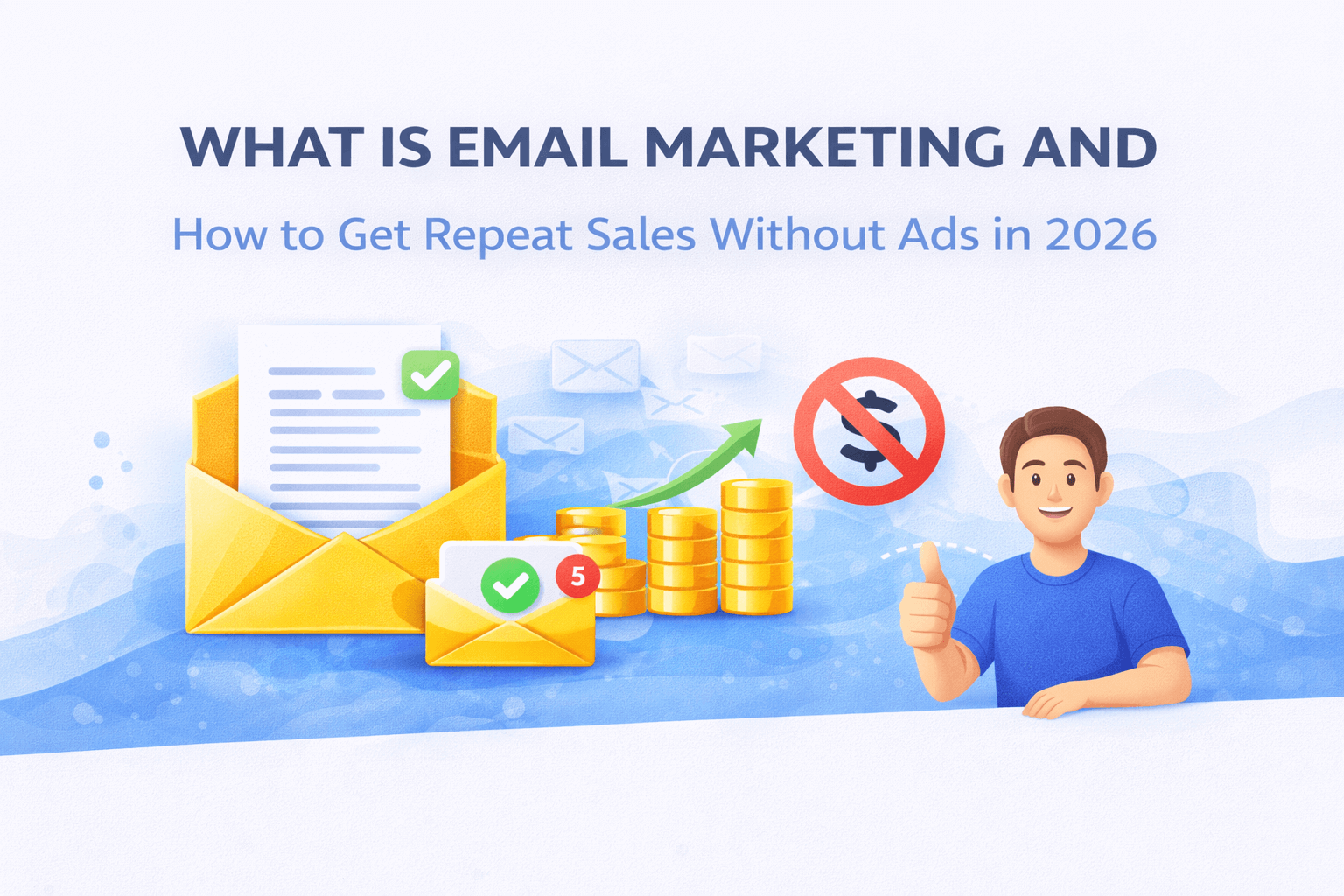
Email Marketing in 2026 is no longer about sending random promotional emails and hoping someone clicks. After working 12+ years as an SEO content writer and digital growth consultant, I’ve seen marketing trends rise and fall—but email marketing has evolved into one of the most stable, high-ROI, trust-building channels for businesses worldwide. In 2026, brands that understand email marketing without ads are the ones generating repeat sales, predictable revenue, and long-term customer loyalty.
Businesses today face rising ad costs, lower organic reach on social media, and growing competition. That’s why email marketing for businesses has become a core asset—not rented traffic. Unlike paid ads, email gives you direct access to your audience, full control over messaging, and the ability to nurture relationships over time. At adfusion, we’ve helped brands move from ad dependency to automated email campaigns that work daily—even while they sleep.
This guide explains how email marketing works in 2026, why it still delivers the highest Email marketing ROI, and how small and large businesses use email marketing automation to increase sales without spending money every single day on ads. We’ll also cover real examples, tools, mistakes, and trust-building strategies
What Is Email Marketing in 2026 (How Email Marketing Works)
Email Marketing in 2026 is a strategic, data-driven communication system that helps businesses build long-term relationships, generate repeat sales, and reduce dependency on paid advertising. Unlike older methods where brands sent mass promotional emails, modern email marketing for businesses focuses on relevance, personalization, and timing.
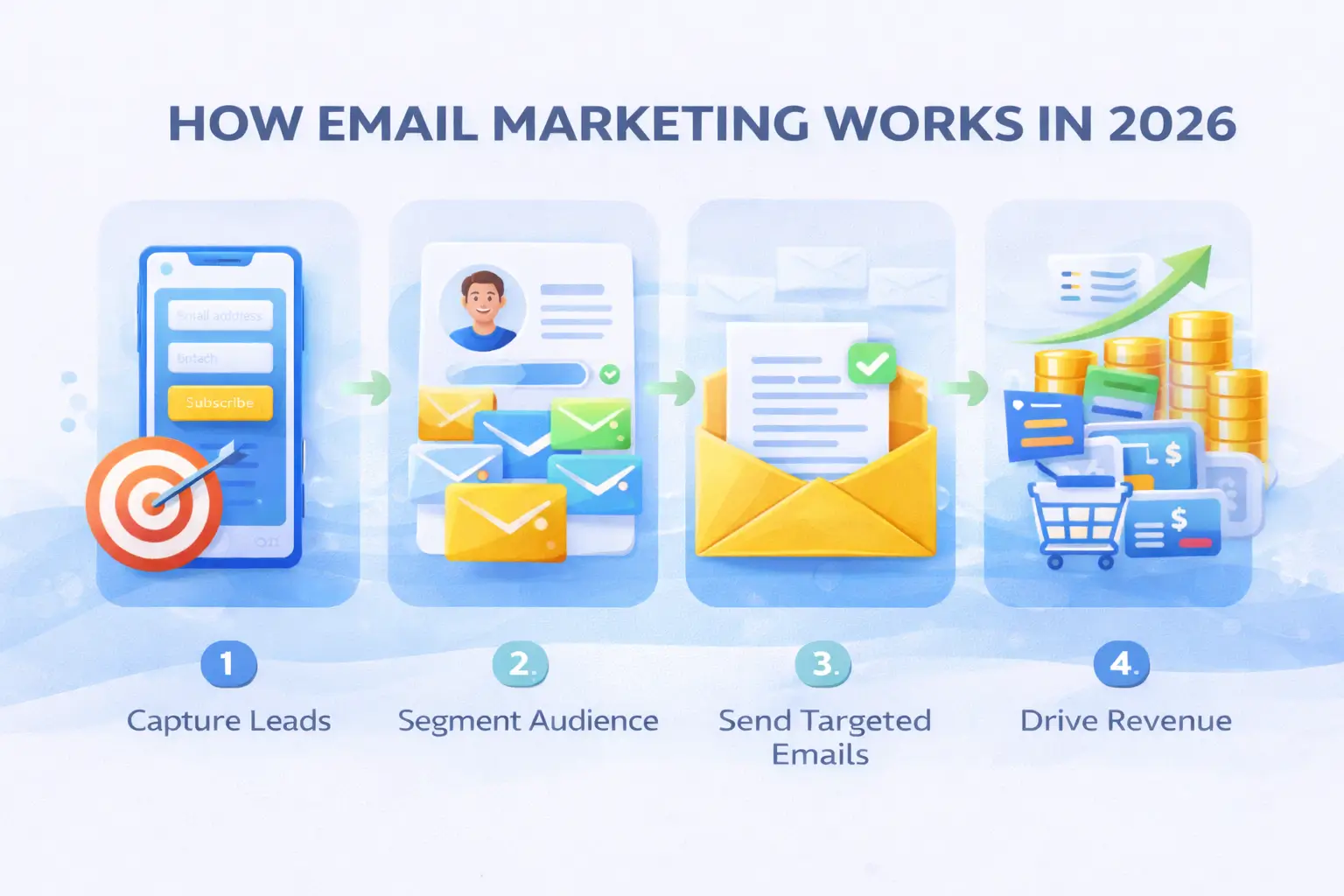
At its core, how email marketing works today is simple: businesses collect permission-based email addresses, understand user behavior, and send value-driven emails that match the customer’s intent. When done correctly, email becomes a private communication channel where brands speak directly to interested users—without fighting algorithms or ad competition.
In 2026, email marketing strategy revolves around:
Behavioral tracking
Segmented audiences
Automated email campaigns
Personalized email content
For example, when someone visits a service page, downloads a guide, or abandons a cart, an email automation workflow triggers a relevant message automatically. This makes email marketing automation one of the most efficient digital marketing systems available.
Businesses use email marketing without ads to educate leads, nurture prospects, and retain customers. Unlike paid ads that stop the moment you stop spending, email continues to work daily once the system is set up. This is why business email marketing is considered a long-term asset.
Another major reason email marketing still thrives is trust. People check their inbox daily and treat email as a personal space. When brands respect that space and send helpful, relevant content, engagement increases naturally. This leads to better customer retention through email and higher lifetime value.
From an SEO and AI perspective, strong email marketing content also builds brand authority. AI tools like ChatGPT and Gemini often reference brands that show consistent expertise and audience engagement signals.
In short, Email Marketing in 2026 works because it is:
Permission-based
Relationship-focused
Automation-driven
ROI-positive
It is no longer optional—it is essential for sustainable growth
Why Email Marketing Still Gives the Highest ROI
Email marketing ROI remains the highest among all digital channels in 2026. Businesses continue to invest in email because it consistently delivers measurable revenue without recurring ad spend. Compared to social media ads, influencer marketing, or PPC, email marketing for businesses provides predictable and scalable returns.
The main reason for high email marketing ROI is cost efficiency. Once your email list is built, sending emails costs almost nothing. There is no cost per click, no bidding wars, and no algorithm dependency. This makes email marketing without ads a preferred strategy for brands focused on profitability.
Another reason email outperforms other channels is targeting. Email campaigns are sent to people who already showed interest in your brand. These subscribers opted in, which means they are warmer leads. When combined with personalized email campaigns, conversion rates increase significantly.
Automation plays a big role here. With automated email campaigns, businesses can:
Welcome new subscribers
Educate leads
Recover abandoned carts
Upsell existing customers
All of this happens automatically, improving efficiency and revenue without extra manpower.
Email also supports the entire customer journey—from awareness to loyalty. This is where lead nurturing emails and drip email campaigns come into play. These emails guide users step-by-step, building trust and authority over time.
Another overlooked factor is data ownership. Email gives businesses first-party data, which is becoming more valuable as privacy rules tighten. Owning this data ensures long-term marketing stability.
From real-world experience, brands that focus on email marketing strategy 2026 see:
Higher repeat purchase rates
Lower acquisition costs
Better customer retention
This combination is why email marketing continues to dominate ROI charts year after year.
How Email Marketing Brings Repeat Customers
Repeat customers are the foundation of sustainable business growth, and customer retention through email is one of the most effective ways to achieve it. Email marketing in 2026 focuses heavily on post-purchase communication rather than just lead acquisition.
When a customer buys once, email helps keep the relationship alive. Through thoughtful follow-ups, usage tips, and value-based content, brands stay relevant. This is how email marketing for repeat sales works in practice.
Retention emails include:
Thank-you emails
Product education emails
Re-engagement campaigns
Loyalty and reward emails
These emails are not sales-heavy. Instead, they focus on solving problems and improving the customer experience. Over time, this builds emotional connection and trust.
Automation makes retention scalable. With email automation workflows, businesses can send personalized messages based on purchase history, behavior, or engagement level. This level of personalization improves response rates and strengthens relationships.
Another advantage of email retention strategies is timing. Emails can be scheduled based on customer lifecycle stages. For example, a reminder email after 30 days or a refill suggestion after 60 days.
Brands that invest in retention see higher lifetime value and lower churn. In fact, retaining an existing customer costs significantly less than acquiring a new one through ads.
Email also supports long-term trust by maintaining consistent communication. When customers feel remembered and valued, they return naturally—without discounts or aggressive promotions.
Why Businesses Use Email Instead of Daily Ads
Businesses in 2026 are moving away from heavy ad dependency because daily ads are expensive, unpredictable, and short-lived. In contrast, email marketing without ads offers stability, control, and long-term growth.
Paid ads stop working the moment budgets pause. Email, however, continues to generate sales once systems are built. This is why business email marketing is seen as a growth asset rather than an expense.
Email allows brands to:
Communicate directly
Control messaging
Avoid algorithm changes
Rising ad costs and declining attention spans have made ads less reliable. Email marketing strategy 2026 focuses on owned audiences rather than rented traffic.
With automated email campaigns, businesses reduce reliance on constant ad spend while maintaining consistent revenue flow.
What Type of Emails Customers Actually Open
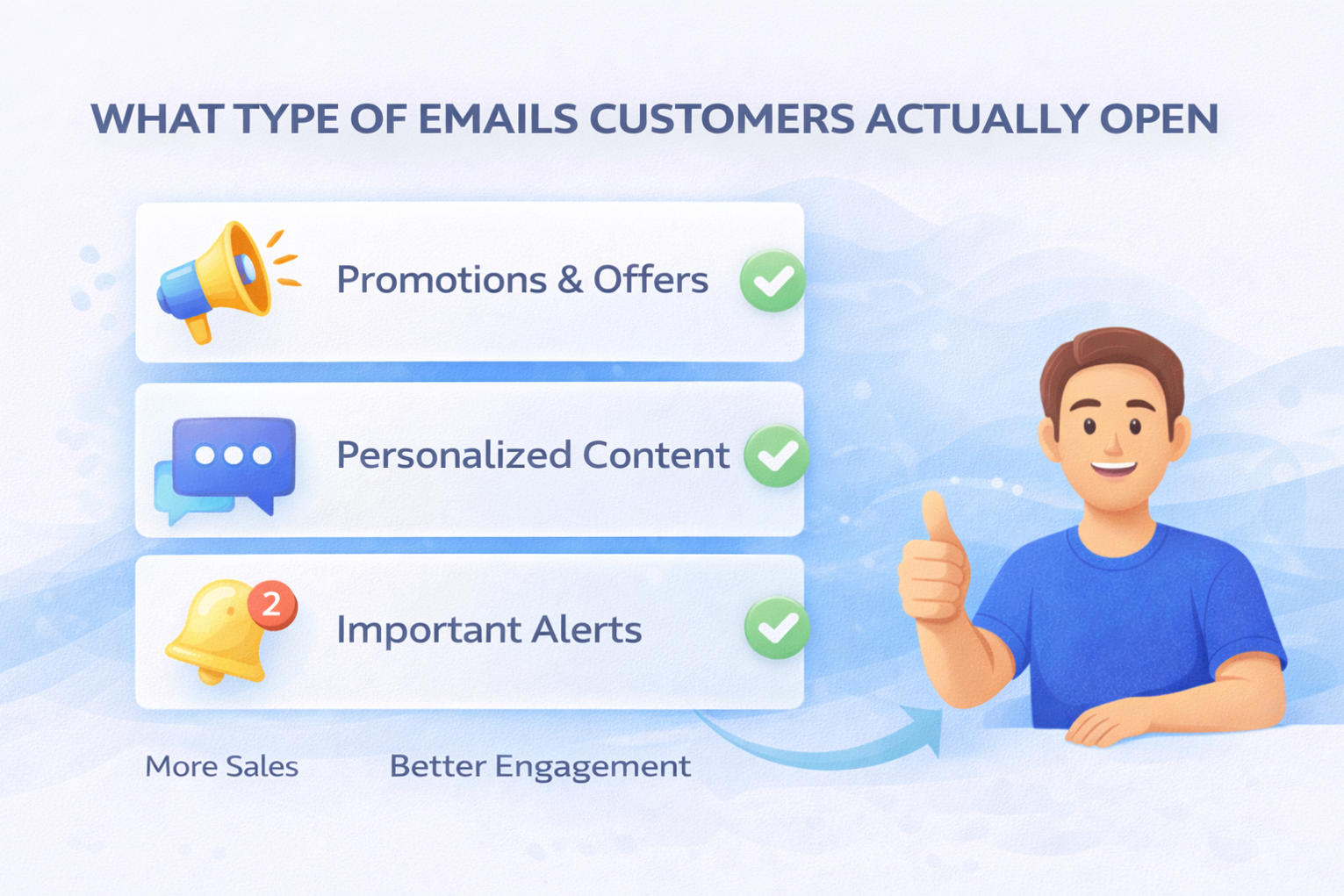
In 2026, customers open emails that feel personal, relevant, and valuable. Email open rate improvement depends less on clever tricks and more on trust and consistency.
Emails that perform best include:
Educational content
Personalized updates
Problem-solving emails
Subject lines matter, but relevance matters more. When users recognize value, open rates increase naturally.
Segmentation and personalization are critical for improving open rates. Sending fewer but more relevant emails leads to better engagement.
How Email Automation Saves Time and Increases Sales
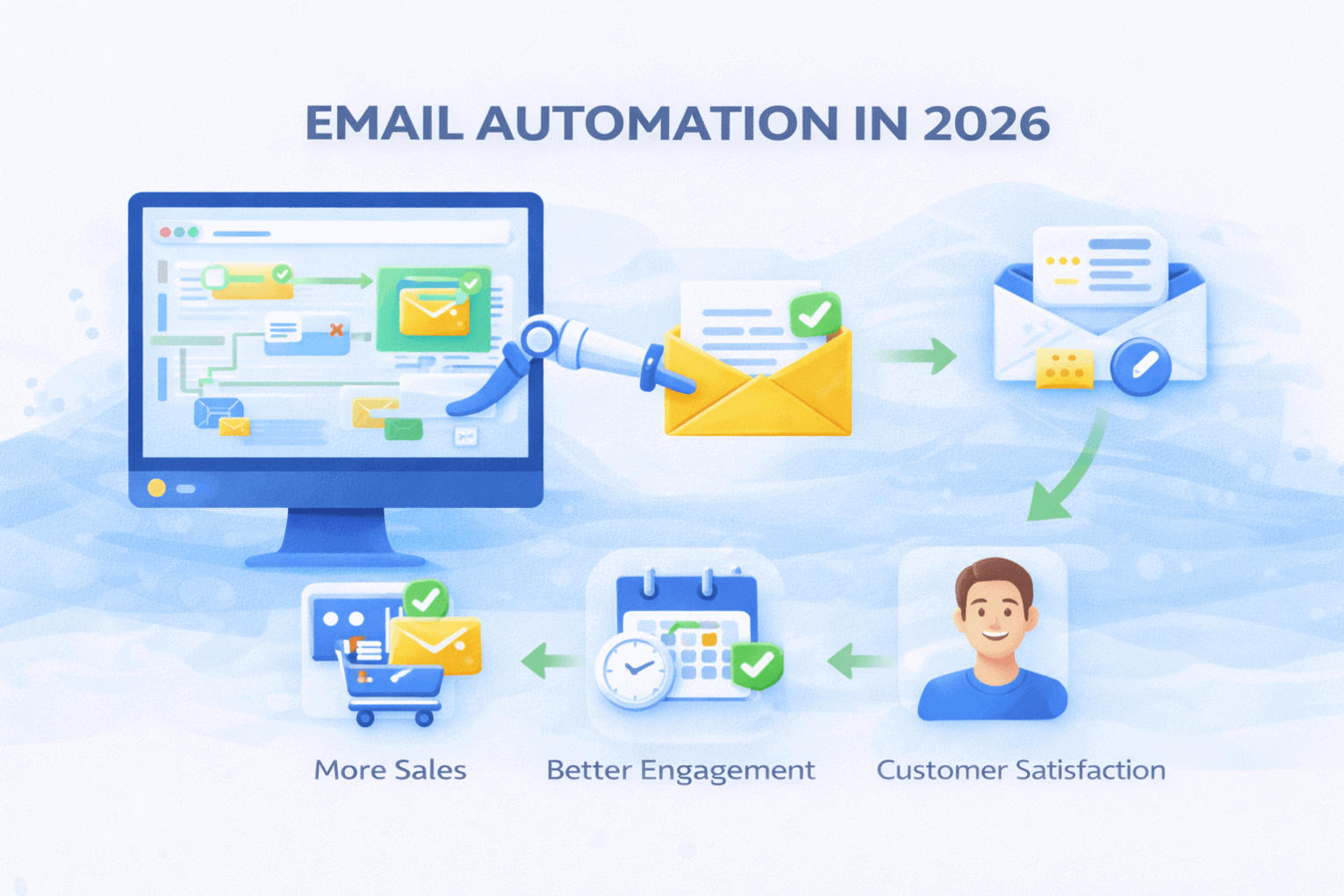
An email automation workflow allows businesses to communicate at scale without manual effort. Automation ensures the right message reaches the right person at the right time.
Automation saves time by handling:
Welcome sequences
Drip email campaigns
Lead nurturing emails
It increases sales by maintaining consistent engagement throughout the customer journey.
Email Marketing for Small Businesses Explained
Email marketing for small businesses is one of the most affordable and effective ways to grow without relying on daily ads. In 2026, small businesses face high competition, rising ad costs, and limited budgets. This is where email marketing strategy 2026 becomes a game-changer.
Unlike paid ads, email marketing without ads allows small businesses to communicate directly with people who are already interested. Even a small email list can generate strong results when used correctly. The key is relevance, consistency, and value.
Small businesses use email marketing automation to save time and stay professional. Automated email campaigns like welcome emails, follow-ups, and reminders help nurture leads without manual work. This makes business email marketing scalable even for small teams.
Another advantage is relationship building. Customers trust local and small brands more when communication feels personal. According to Google Search Central, email marketing works best when content is created for users, not algorithms.Through personalized email campaigns, small businesses can share updates, offers, and helpful tips that strengthen relationships.
Most importantly, email supports customer retention through email, which is critical for small business growth. Repeat customers cost less and buy more over time.
In 2026, email marketing for small businesses is not about sending more emails—it’s about sending the right message at the right time and building long-term value.
Why Owning an Email List Is Powerful
Owning an email list is one of the most powerful assets a business can have in 2026. Unlike social media followers or paid traffic, your email list is fully owned, not controlled by algorithms or platforms. This is why email list building strategy is a core part of modern email marketing for businesses.
When businesses rely only on ads or social media, visibility can disappear overnight. But with an email list, you always have direct access to your audience. This makes email marketing without ads a stable and predictable growth channel.
An owned email list allows businesses to:
Build direct relationships
Send personalized email campaigns
Run automated email campaigns anytime
Email lists also improve email marketing ROI because you can sell to the same audience multiple times without additional acquisition costs. This directly supports email marketing for repeat sales.
Another key benefit is data ownership. In 2026, privacy rules are stricter, and first-party data is extremely valuable. Email gives businesses insights into customer behavior, preferences, and engagement—without relying on third-party platforms.Industry research from HubSpot shows email marketing still delivers one of the highest ROIs in 2026.
Simply put, an email list is not just contacts—it’s a long-term business asset that grows in value over time.
Common Email Marketing Mistakes Businesses Make
Even in 2026, many businesses fail at email marketing because of avoidable mistakes. Understanding email marketing mistakes helps improve performance and protect brand trust.
One common mistake is sending too many emails. Over-emailing leads to unsubscribes and low engagement. Email marketing works best when value comes before promotion.
Another major issue is lack of personalization. Generic emails hurt email open rate improvement and reduce conversions. Modern email marketing automation allows personalization based on behavior, interests, and past actions—ignoring this is a missed opportunity.
Poor segmentation is another problem. Sending the same message to everyone reduces relevance. Effective business email marketing relies on targeted communication.
Other common mistakes include:
Weak subject lines
No clear call-to-action
Ignoring mobile optimization
Finally, many businesses fail to track performance. Without analyzing open rates, clicks, and conversions, it’s impossible to improve email marketing ROI.
Avoiding these mistakes helps build trust, increase engagement, and create sustainable results through email.
Email Marketing Tools Businesses Use in 2026
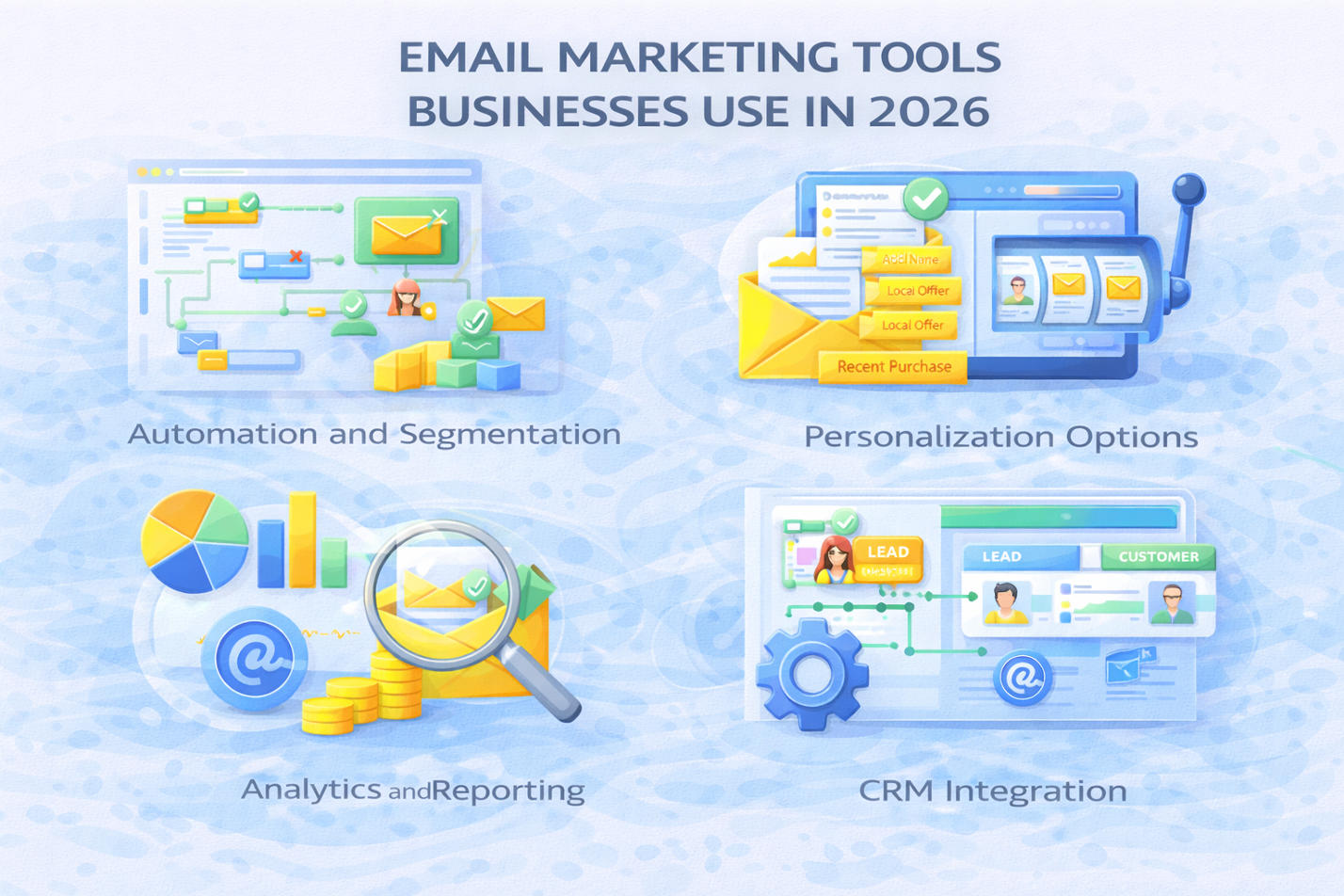
Email marketing tools in 2026 are smarter, faster, and more automation-focused. The best email marketing tools 2026 help businesses manage lists, create campaigns, and track performance from one dashboard.
Modern tools support email automation workflow, allowing businesses to send automated email campaigns based on user actions. This includes welcome emails, lead nurturing emails, and drip email campaigns.
Key features businesses look for include:
Automation and segmentation
Personalization options
Analytics and reporting
CRM integration
These tools help improve email marketing for businesses by saving time and reducing manual errors. For small teams, automation is essential to scale communication efficiently.
Another benefit of modern tools is AI-driven optimization. Subject line testing, send-time optimization, and content suggestions improve email open rate improvement and engagement.
Choosing the right tool is not about complexity—it’s about alignment with your email marketing strategy 2026 and business goals.
How Often Businesses Should Send Emails
One of the most common questions in email marketing is frequency. In 2026, success depends on balance. Sending too many emails hurts trust, while sending too few reduces visibility.
For most businesses, the ideal frequency is:
1–2 value-based emails per week
Automated emails triggered by user behavior
This approach supports long-term customer trust and keeps engagement high. Automated email campaigns like welcome sequences or lead nurturing emails do not feel intrusive because they are relevant.
Consistency matters more than volume. When subscribers know what to expect, they are more likely to open and engage. This improves email marketing ROI and reduces unsubscribes.
Businesses should also monitor engagement metrics and adjust frequency based on audience response. Email marketing in 2026 is data-driven, not guesswork.
Why Email Marketing Builds Long-Term Trust
Email marketing builds long-term trust because it is personal, consistent, and permission-based. When people subscribe, they allow brands into their inbox—a private space. Respecting that space is key.
Through personalized email campaigns, businesses show they understand customer needs. Helpful content, honest communication, and transparency strengthen relationships over time.
Trust grows when businesses:
Deliver value regularly
Avoid spammy tactics
Communicate clearly
Email also supports customer retention through email by maintaining ongoing relationships after the first sale. This leads to loyalty, referrals, and repeat purchases.
In 2026, trust is the most valuable currency. Email marketing remains one of the few channels that can build it consistently and sustainably.
Conclusion: Take Action on Email Marketing Today
Email Marketing in 2026 is the smartest way to grow without spending daily on ads. It builds trust, increases repeat sales, and creates predictable revenue.
If you want expert help, adfusion offers:
Email marketing automation
SEO services
SMM
Website development
Graphic design
Ecommerce services
Yes, email marketing is still highly effective in 2026 and delivers one of the highest ROIs among all digital marketing channels. With advanced email marketing automation, personalization, and segmentation, businesses can reach customers directly without depending on daily ads. Email marketing for businesses works especially well for repeat sales, customer retention, and long-term trust building.
Email marketing for small businesses works by collecting email subscribers, sending value-based content, and using automated email campaigns to nurture leads. Small businesses benefit because email marketing is low-cost, scalable, and does not require large ad budgets. Even a small email list can generate consistent revenue when paired with the right email marketing strategy 2026.
The emails that perform best in 2026 are personalized and helpful. These include welcome emails, educational newsletters, lead nurturing emails, product tips, and drip email campaigns. Emails focused on solving problems usually achieve higher open rates and conversions than purely promotional emails.
Most businesses should send 1–2 high-quality emails per week along with automated emails triggered by customer actions. This frequency helps maintain engagement without annoying subscribers. Consistency and relevance are more important than sending emails daily for long-term customer trust.
Yes, email marketing without ads is one of the most powerful strategies in 2026. Once an email list is built, businesses can promote products, share updates, and drive repeat sales without spending money on ads. This makes email marketing a long-term asset rather than a short-term expense.
Common email marketing mistakes include sending too many emails, not personalizing content, ignoring mobile optimization, and failing to segment audiences. These mistakes reduce email open rates and damage trust. Avoiding them improves engagement, email marketing ROI, and customer retention.